When a completely new vision on media sphere united people all around the world.
Created by Daneliya Azamat P2836178
Visit site: https://daneliyatiktokbrandblog1.our.dmu.ac.uk/

Fifteen seconds. One scroll. And suddenly several hours have passed. TikTok is a social media platform where people can post short vertical videos on any subject, starting from beauty blogs to global news. That is why nowadays it became one of the most popular and addictive media that draws people in: from kids to elderly people.
TikTok began its path in 2014 under the name Musical.ly, founded by Alex Zhu and Luyu Yang, where people could post lip-sync videos and dance covers. By the year of 2017 there were hundreds of millions of users.
In September 2016, the company named ByteDance launched an app called A.me, which was later renamed Douyin, where people could watch short vertical content. This app gained great popularity in China. ByteDance wanted to dominate the global market, so they created an international analogue of Douyin called TikTok.
Moreover, on the 9th of November 2017, ByteDance bought Musical.ly for about one billion dollars. Then, ByteDance combined Mysical.ly and TikTok and transferred all user accounts and data to one service.
What stands behind that great success?
It is a perfect mix of market needs, psychology and personalized algorithms. The main goal of TikTok is to fulfill people’s need in
content that will be easy to understand and quickly evokes an emotional response such as: laughter, shock, tears or inspiration.
The platform also unites people all over the world – users can share videos dedicated to different fandoms and inspire their followers to watch more and more content.
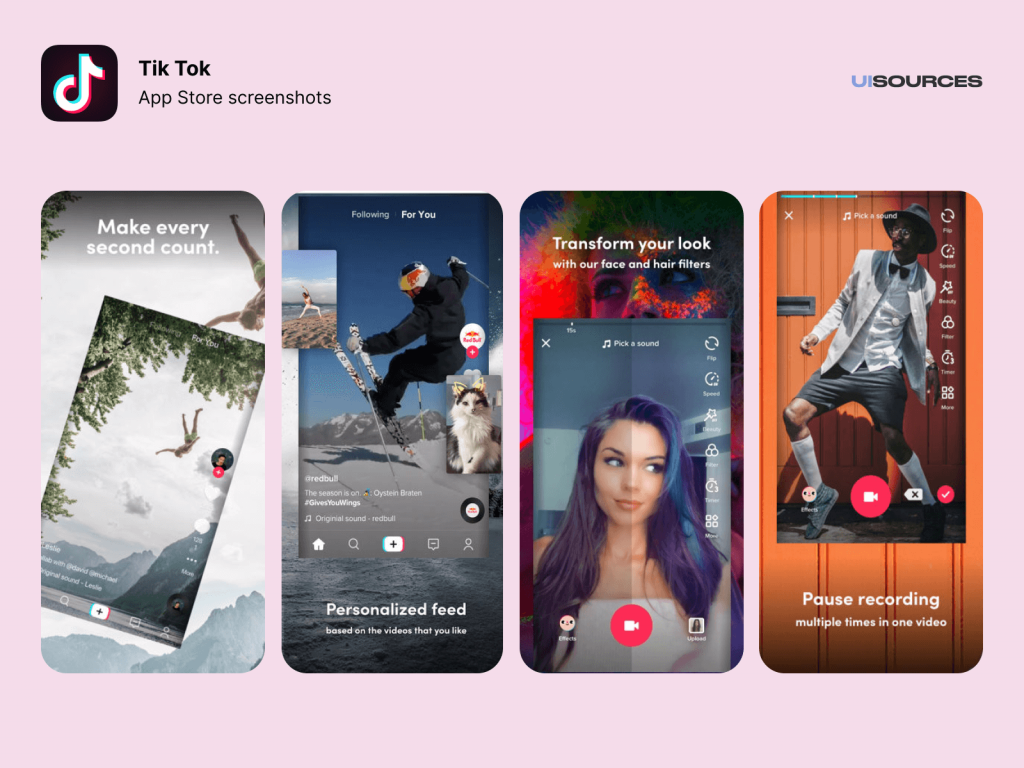
TikTok offers an enormous variety of videos for everyone: funny videos for teenagers, global news, lifehacks for elder people. Users can both watch and create content due to easiness of creating short content. That is the reason why users can feel closer to their bloggers, because there is no need in professional video shooting, and this is a tool that influencers use to create appearance to convince people in their relevance.
So how enjoyers consume content?
This social media platform allows users to stay passive. It is unnecessary to search or request for content. The “For You” page algorithms automatically adapt to users’ behavior: viewing time, reaction, repetition. Personalization makes platform viewing process itself continuous and addictive.
Furthermore, the level of emotional value of platform stimulates an instant emotional response. Its effectiveness is explained by the combination of cognitive, emotional and behavioral factors.
Short videos do not require long concentration or active thinking of the user. Each video clip is a complete piece of information that can be easily perceived in a matter of seconds. This reduces the cognitive load and makes the visualization process as simple as possible, which corresponds to the principles of behavioral economics and the theory of minimal effort in decision-making.
Regular interaction with short content leads to the formation of automatic behavior: the user opens the application without a specific purpose. The endless scrolling format encourages habitual behaviour, where users open the app without a clear intention, often spending more time than planned.
This can really affect attention span, productivity, and even mental wellbeing, especially among younger users. From a brand management perspective, this creates a challenge for TikTok. The app must balance engagement with responsibility if it wants to sustain long-term trust and loyalty.

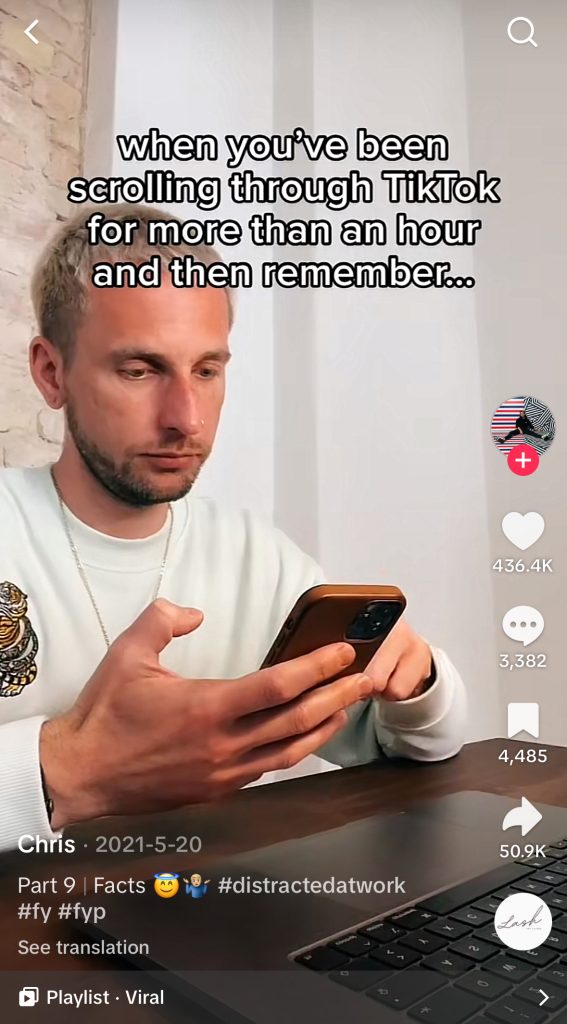

(it’s a trap that almost everyone falls for)
Section 2.
Approaches to brands Sustainability
What is the main purpose of this app? Basically, as many other social media TikTok do not have a great purpose rather than just share your life and create content. However, it is a perfect platform for sharing fast and accessible information. Along with fast and easy content consumption the actual process of making TikTok videos is very easy.
The main aim for TikTok is to share ideas, unite people and give opportunities for new creators to become viral. Although, most users nowadays use TikTok for everything: streams, studying, watching global news but mostly entertainment.
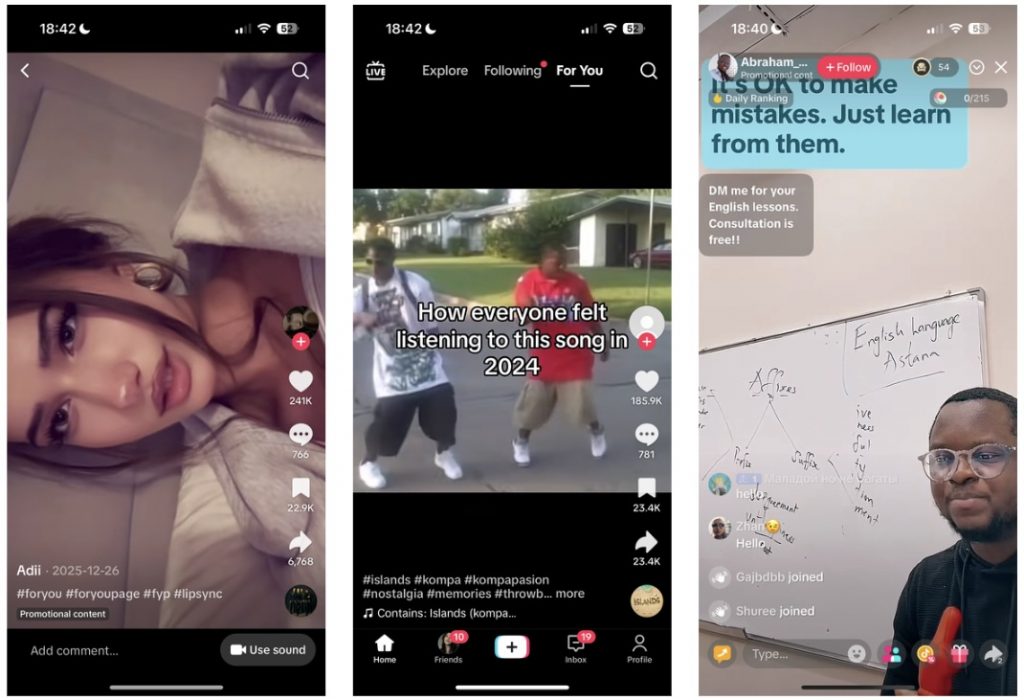
Screenshots of For You page from TikTok app. (memes, educational streams, average lip-sync video)
What are the values of this brand?
The core values and mission of TikTok still relies on creativity and inclusivity. ByteDance is actively investing in the development of digital content creation tools, educational initiatives and security features, which contributes to the sustainable growth of the platform and builds user trust and even somehow create workplaces! Some global bloggers can earn money from posting videos or making ads.
But still, the most important goal for TikTok is to keep the users’ attention for as long as possible. The brand’s long-term vision is to become a leading global platform for sustainable digital creativity and learning.
Brand strives not only to entertain users, but also to have positive social impact by supporting educational projects, mental health and sustainability initiatives. In the future TikTok aims to create a responsible digital culture and strengthen trust between media platform, users and society.
As everyone knows, TikTok has a strong brand image, and its name represents the dynamics and rhythm of modern and digital content. The brand’s identity is built around the idea of easy self-expression and engagement. The vibrant visual style and ease of use with focus on user-generated content directly shows the brand’s mission and vision to make creativity accessible for everyone.
What about target audience?
Most of us definitely could notice kids, youngsters and even grown people using this app! However, TikTok mostly is for representatives of Gen Z and millennials, but the platform is also actively attracting even more adult audience, brands and educational organizations. Users’ main motivations include a desire for self-expression, social interaction, recognition, entertainment, and learning.
TikTok meets the needs of its audience very well by offering creative tools, personalization and monetization opportunities. Both bloggers can reach their audience and users can find influencers they feel more related with. The brand appeals to users’ self-concept, positioning itself as a space of freedom, authenticity and creativity.
For users, TikTok is becoming not just a social network, but a part of their digital identity and a way of self-realization in modern society.
The logo is too simple!
Yes, that is why it works veery good:)
The TikTok logo is a minimalistic but very thoughtful visual symbol. It is based on a stylized musical note, which refers to the origins of the platform, when content was closely related to music, dancing and lip-sync. The effect of shifting red, blue and white colors creates a feeling of vibration and movement, like a sound going off the screen.
The black background highlights the contrast and makes the logo stand out in a digital environment. This design reflects TikTok’s dynamic, youthful, and viral nature, as well as its connection to the nightclub culture and digital rhythm of Generation Z.
Section 3.
Brand Identity and Design.
The process of forming the TikTok brand is literally the reason why this blog is dedicated to this app. TikTok gives everyone the opportunity to be heard and seen. TikTok’s name refers to the sound of a ticking clock/timer before the video begins recording. It also shows us rhythm and brevity of the moment, directly related to the format of short videos. The name is super easy to remember, its international and strongly associated with dynamics and movement.
The TikTok logo is the representative of music itself.
It emphasizes on the platform’s musical origins. The single central element is a stylized musical note, made with a glitch effect with neon glow. This visual reflects digital culture, nightlife aesthetics, the energy of the club scene, and creative chaos of user generated content.
The color shifting effect also symbolizes polyphony and mixing of identities, because that is also connected to the main values of TikTok.
Colors are the significant part of any brand, that is why when every app now uses light blue, green and orange color to make a trustful appearance-TikTok uses black background, complemented by bright accents of neon pink, blue and white. Black highlights depth with catchy contrast, neon shades create a scene of energy and digital presence.
This logo reinforces associations with something “cool”, especially for teenagers who are very greedy for this vibe.
However, in fact, even with that bright appearance the typography is minimalistic and simple. Readable sans-serif fonts are used, which provide ease of perception on mobile devices that do not distract from the main user content. Overall, the visual style is intentionally dynamic and that clearly shows the freedom and spontaneity of the platform.
TikTok’s Tone of Voice is playful, informal and supportive. Entertainment is the reason why enjoyers use this app and marketers of TikTok satisfy their “clients” by communicating with their audience using humor, trends and memes.
No one feels pressure using this app, because the clear message is “be creative, take it easy!”, unlike Instagram for instance, where users pulling out all the stops to convince everyone that their life is perfect even if that’s not true.
Section 4
Brand Positioning and Target Audience
This section will include some analysis with statistics and might slightly be more complicated than others, but we are almost there, so stay tuned! 🙂
To understand the brand’s market position and its impact on consumer behavior let’s use a differentiation model in marketing, based on audience segmentation and consumer needs.
Brand Positioning:
TikTok positions itself as a platform where users can easily both watch and share content. Strong algorithms, personalization, short, fast and entertaining videos makes the level of high engagement of users. Building and ecosystem where ordinary users can become opinion leader also creates a sense of belonging.
So, what does that mean? Even if some apps will include alternatives such as YouTube Shorts or Instagram Reels -that will not be as good as TikTok. This is the reason why this app is still very sustainable and has hundreds of million users. Even with substitutes TikTok stays on the market.
Target Audience:
Our now well-known brand with short videos attracts a very wide audience, especially focuses on young users.
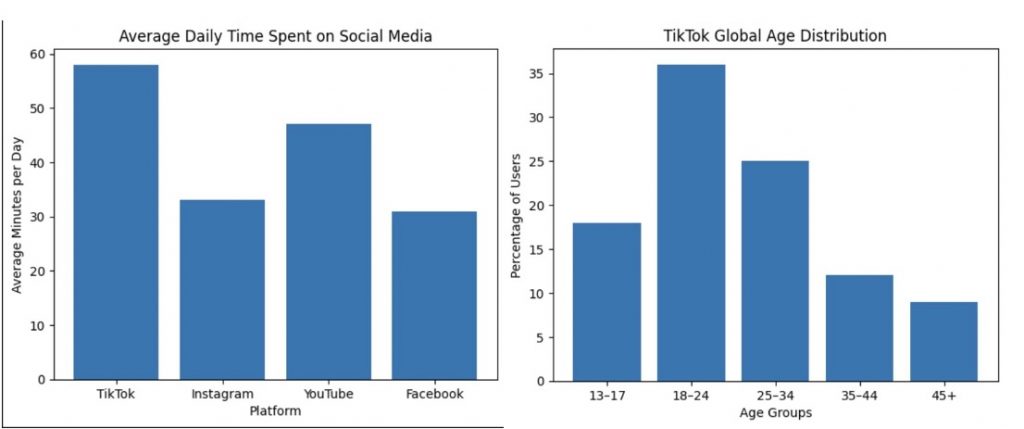
According to analytics of Market.biz,2025:
- The platform has more than 1.9 billion monthly active users worldwide by the year 2025.
- Users aged 18-34 make up a significant proportion of the audience, especially Gen Z and Millennials.
- Users spend about 58 minutes a day on the platform, which shows high engagement.
Maslow’s Theory:
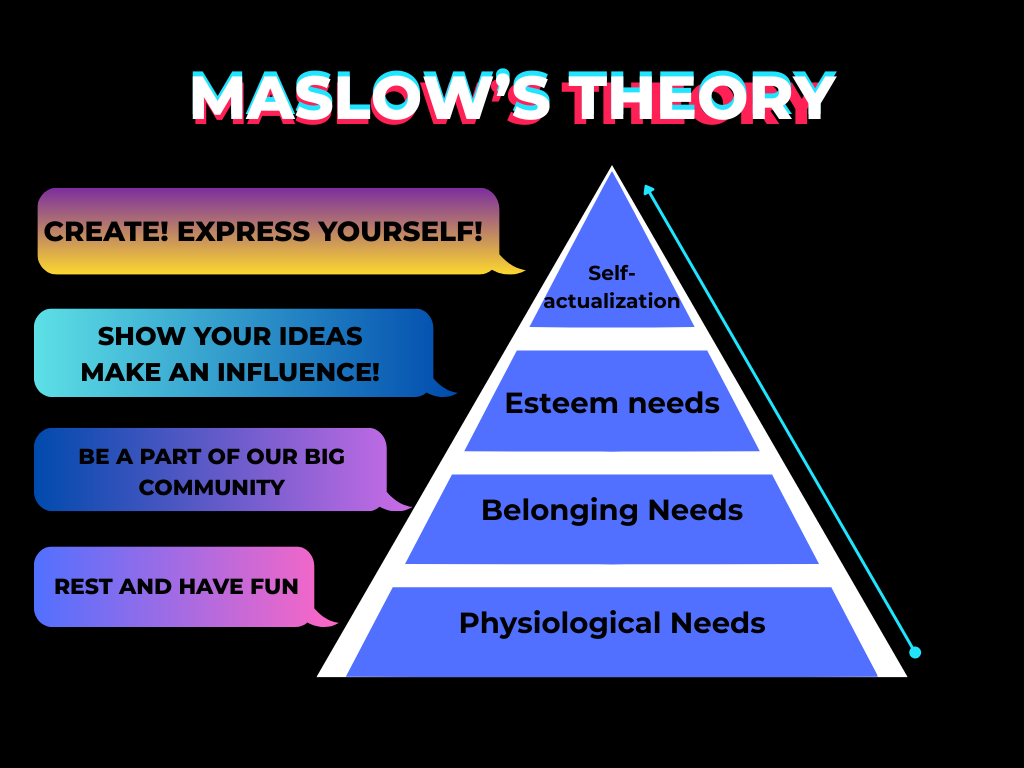
TikTok successfully satisfies several levels of Maslow’s pyramid of needs which simply explains why there is a high engagement among users.
As it was mentioned before, the platform that encourages creativity, experimentation, and self-expression through short videos, music and visual style will of course cover the needs of self-actualization.
At the level of esteem needs TikTok is especially strong. Likes, reposts, views, and the opportunity to shoot to fame, get viral give users a sense of importance and social approval. Unlike other apps this one would definitely allow creators to become visible which increases motivation to create more content.
At the level of social needs (AKA belonging and love), the same app beloved by everyone creates the sense of belonging through trends, challenges, duets and comments. Users feel like they are part of a big community even if there are no personal connections with other members.
The last one physiological needs level could be a bit far-fetched, but basic human need could possibly also include rest and leisure time. And it feels like there is no need to say again that TikTok is the representation of entertainment.
Keller’s Brand Equity model:
From the point of view of Keller’s model, TikTok has a high brand value.
First, brand awareness: this app is one of the most recognizable social media in the world with over 1.9 billion monthly active users (Statista, 2024).
Secondly, brand associations: TikTok is associated with trends, viral content, and youth culture. These associations form a clear image of the brand in the minds of consumers.
Thirdly, perceived quality: the personalized algorithm of For You Page creates a sense of relevant and “high-quality” content for each user.
Finally, brand loyalty is expressed in a high average usage time of about 58 minutes per day, which indicates a strong emotional connection with the brand.
TikTok turns scrolling into identity, trends into community, and “just one more video” into a daily habit, isn’t it?;)

Leave a Reply